After 18 years in sales and marketing at tech startups, he built Aimpler to map your skills, show where AI is changing your job, and give you one real AI task a week.
Vivek Sai demoing Aimpler's Skills Constellation on his laptop at the Tannery
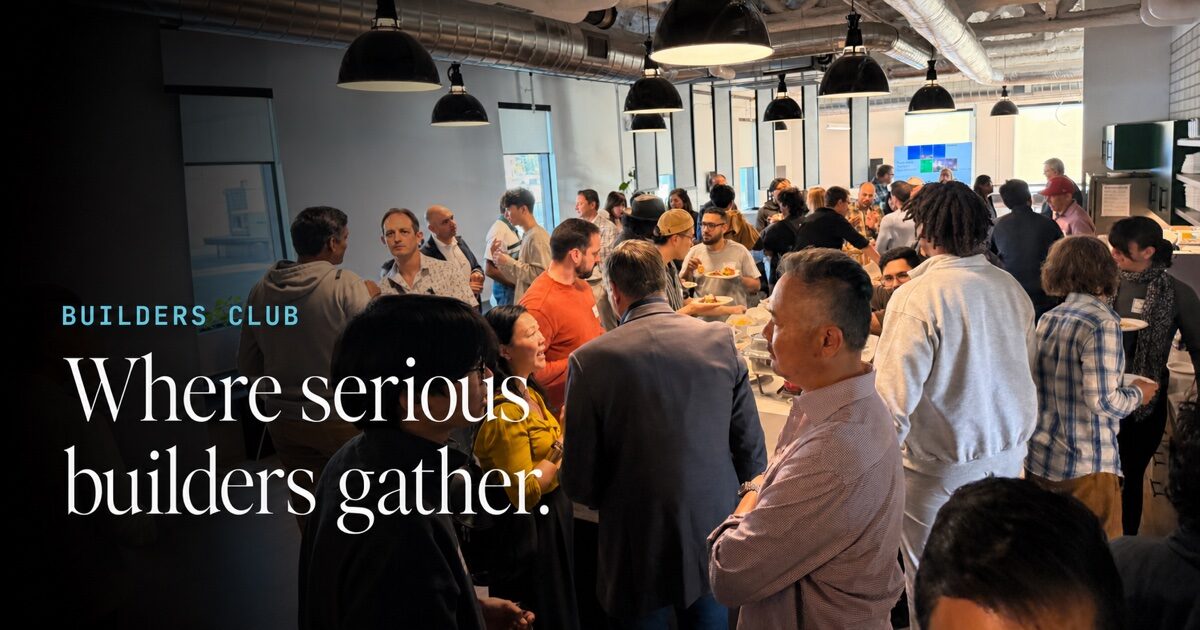
I first met Vivek Sai at an event at Builders Club, where he showed me the system he built to run his own sales and marketing with AI. There was a lot going on that night and he never got to show me the product he is actually building, so on Monday morning I met him for coffee and he walked me through it from the start.
The product is called Aimpler, and it is built for people who work in sales, marketing, customer service, finance and data, and who know AI is changing their jobs but aren't sure what to do about it yet. Vivek told me that as a software engineer I was a little ahead of the curve, and that the people he most wants to reach are the ones on the business side of a company.
3 minto know where you stand as AI changes your job
1 weekto start using AI on the work you already do
30 daysto build the skills your career needs, beyond AI
From your resume to a map of your skills
Vivek started the demo by uploading his own resume. Aimpler reads it and builds what it calls a Skills Constellation, which looks like a mind map with three core professional skills, two smaller skills under each one, and then your transferable skills, like project management or being a good communicator. You can also type your skills in yourself if you would rather not share your resume. Seeing my own resume turned into a map like that would be a fun way to start.
One resume, read into a map of everything you can do, including where you stand with AI
After that it asks a few questions to place your AI level, from someone who asks a chatbot about the weather to someone who writes scripts and prompts to make their content. Then it asks about your personal traits, the things you like and are good at outside of your job. Vivek's reason for that part is that if more roles go away, some people will need to make money from something other than their profession, like the person who is good at photography and becomes a photographer.
Then it shows you a summary of yourself and what AI is doing to jobs in your field. The data behind that comes from public research, including Microsoft's report on which jobs AI applies to and Anthropic's Economic Index, and Vivek has turned it into a page for each of 342 occupations showing which parts of the job are being automated and which are growing. For his own sales background, it pointed him toward becoming a GTM (go to market) engineer, someone who builds the systems a sales team runs on.
Aimpler's AI impact by domain page, comparing how much AI touches each field
One real AI task a week
Once you are on the platform, the part I liked most is the upskill tracker. It gives you workflows for your own field, broken down into small exercises. Vivek's example was a sales manager who has done the same job well for years and finds AI a lot to take on. One workflow shows them how to write a one page brief on a company before they reach out for the first time. They copy the prompt, put in the company's name, paste it into Claude or ChatGPT, and see what comes back. As they finish more of them, harder ones show up.
“
It's like a gym coach. The coach gives you three sets of this. So the next day, he'll say, okay, increase 10 pounds on it.
Vivek Sai
Vivek also showed me that you can connect Aimpler to Claude or ChatGPT through MCP, the standard way to plug an app into an AI assistant, so the work you do there shows up back on the platform. There is a learning log for the articles and videos you read, a section of free courses he picked from people like Google and Andrew Ng, and the Hive, which keeps you up to date on what is changing in AI for your field, like new voice agents for sales.
Vivek built the 11 success metrics with a career development professional who is also an adult learning expert. He told me they are a way to measure yourself when there is no company doing it for you. They cover learning AI, but also building a personal brand, negotiating, and the other things you would need if you ever went out on your own. You start by rating the four areas it picked from your resume, which takes about three minutes, and come back each month to see what has moved. Your weakest areas become a 30 day focus, with one workflow and a few short tasks for the week.
Rate yourself, see what moved, and leave with a plan for this week
The Aimpler journey has six stages: Discover, Diagnose, Commit, Practice, Show and Belong
Why "fractional"
Aimpler launched as Fractional Manager, and that first name comes from the idea Vivek kept coming back to. He thinks that as AI does more of the work, people will need to become the person who directs it, and that many will end up working part of their time for several companies instead of all of their time for one. Getting a first job is already harder than it was. In October, Statistics Canada put unemployment for Canadians aged 15 to 24 at 13.7 percent. Stanford researchers found that employment of 22 to 25 year olds in the jobs most exposed to AI is 19 percent below where it would be if it had kept pace with their peers in less exposed jobs, while older workers in the same jobs show no such gap. It isn't only new graduates either, since US employers have cited AI in more than 120,000 job cuts so far this year, by Challenger, Gray & Christmas's count.
Vivek's answer for both groups is what he calls agency, which means being able to work on your own, make good calls without a manager, and direct AI to do more of the work. For a new graduate, that means learning to work like a one person team from the start, and Aimpler tracks it through success metrics like Autonomy and Choice and AI-Enabled Capability. People a few years into their careers often have those habits already, so for them it is about staying ahead, directing AI across their own work and taking those skills to several businesses at once. He gave me my own example. As a software engineer, I could help a cafe build a better system for their orders, help a founder build their first version, and help a small business fix its payroll, all at once.
“
The word fractional has been usually associated with the CXOs. But the point of view is I think every manager needs to become a fractional person.
Vivek Sai
This reminded me of when I was at Lego and I was given credits for a career service that mostly helped you rewrite your resume. It felt like the last generation of this kind of tool. This one is about how jobs are changing now, and I could easily see a company giving it to people they are helping through a transition.
What five months of user conversations taught him
When Vivek started, he planned to sell Aimpler straight to people like you and me. Over the last four or five months, Vivek told me, he found that associations see even more value in it, since they can offer it to all their members at once. So alongside people signing up on their own, he has started working with groups like HR and marketing associations as part of an early beta. He also thinks colleges and universities need this even more, since a student who spent four years learning marketing is graduating into a job market that has changed under them. He has reached out to the University of Waterloo's researchers who study the future of work.
He also talked to people who run learning and development at large companies. They told him that even when a company gives every employee a free login to an online learning platform, only about 20 percent use it. Vivek said he was the same when he worked at a big company and never logged in unless it counted toward his goals. What people do show up for, they told him, is in person coaching.
So Vivek also runs in person AI workshops for sales and marketing teams, from two hours up to two days. He recently ran one in Vancouver for marketers from the concrete industry. He studied how their buyers search now, since in his words many have moved from Google to asking an AI, and showed them how to change their content for that, along with automations and agents. I love that he researched one industry that closely for a two hour session. He told me they asked him to turn it into a series of smaller classes, which he plans to start in December, and that the workshops are also where people first hear about Aimpler.
Vivek has also been talking with career coaches. He presented the idea of the future of work to CDP Ontario, a group of career development professionals, and found many of them liked it, though some wondered whether a tool like this works with them or against them. His answer is a coach account, which I thought was a smart one. A coach can invite their clients, watch their success metrics and help them along, and keep working with them after the usual three month package ends.
Eighteen years of sales
Vivek has worked in sales and marketing for about 18 years. He started as a field salesman going door to door selling software, and in 2015, when tech startups were taking off in India, he took the risk of joining one to build its sales team. He said nobody else in his circle was doing that. He was selling something new that people didn't have a word for yet, and he found he liked working with the product team as much as he liked selling.
Vivek has always taught himself the technical side, from setting up email to buying a domain and hosting a website. When AI coding tools came along, he built the first version of Aimpler on his own, and an engineer friend now helps him with the development.
Vivek came here in 2022 to study at Conestoga, and later went through Conestoga's Tech Venture Lab in its winter 2025 cohort. He told me he likes the feel of the tech scene here, with people building things, breaking things and figuring things out. His first product idea, a few years ago, was a portfolio with a short video intro and real accomplishments, made after he saw one job post get 500 applications in under four hours, at a time when people were using ChatGPT to rewrite their resumes for every post. He said that after 2025 he could see AI changing careers themselves, and Aimpler grew out of that.
“
I feel simplifying is the most complex thing. So simplify, break it down.
Vivek Sai
Next for Vivek is putting more automation into his own work. He thinks more companies will be very small in the future, run by a few people with AI doing much of the sales and marketing. He already has agents writing his content and wants to go further.
If you have tried Aimpler, or you run training for a team here and have a story about what actually gets people to learn AI, I'd love to hear about it on the contact page.
Pick your field and walk through a typical day, see where AI already does the work, and find where you could take it next. For sales, marketing, customer service, data, finance and admin professionals.
A selected membership and clubhouse in downtown Kitchener for founders, operators and students making something real, with Wednesday sessions open to anyone.




Comments
Sign in to commentNo comments yet. Start the conversation.