At the AC Innovation Showcase on November 10, Ruth Casselman launched AC:Backed with a planned $50,000 for ArcticEdge, and five AC:Studio founders told the room what they built in 18 months.
Kade Truman and Drew Davidson of ArcticEdge, Drew's mother Kelly and Ruth Casselman with the AC:Backed cheque
The Accelerator Centre turned 20 this year, and on November 10 it celebrated with the AC Innovation Showcase at 300 Hagey, an office floor the Cora Group offered the AC for the day, with the AC's own building and logo right across the street. It was an awesome afternoon! About 40 companies from the AC's programs had booths, and I was there for all of it, from the booths to the five founders from the second cohort of AC:Studio, the AC's program that gives companies up to $100,000 in funding and support through FedDev Ontario, pitching on stage. What I didn't see coming was the Accelerator Centre announcing that it would start investing its own money in startups!
Twenty years, and last year's numbers
Ruth Casselman, the AC's CEO, opened by getting a full room quiet with a trick she said works in kindergarten 🌊🤫. This year is the AC's 20th anniversary. She said she didn't have numbers for all 20 years, so she gave the numbers for the last fiscal year alone. The companies the AC worked with brought 335 new products to market.
Ruth Casselman opening the showcase at the podium
251companies the AC worked with
204jobs they helped create
$37Mraised
$68Min revenue
Then Ruth asked how many founders were in the room, and then how many of them needed money. Most of the hands stayed up, and she joked that they should keep them up so the investors in the room could see who was raising. Ruth said she has been a founder herself, and that access to capital is one of the biggest problems early founders face, long before they are ready for a big venture round.
AC:Backed
Then Ruth announced AC:Backed, which lets the AC put money straight into the companies it works with. She said it is not a venture capital fund. The money is what the AC earned from its own operations, and the decisions are made by an investment committee from outside the AC, which reports to its board.
The screen congratulating ArcticEdge Technologies after the announcement
“
So not just helping them to connect to capital, but creating the opportunities for us to directly invest in the companies that we're also helping to build.
Ruth Casselman
The first intended investment is $50,000 in ArcticEdge, a Waterloo materials company and AC:Studio alumnus. It is $25,000 in cash and $25,000 in support through AC programming. Ruth congratulated co-founders Kade Truman and Drew Davidson, and an oversized cheque came out for the investment the AC says it intends to make.
Then Ruth invited Kelly, Drew's mother, up to the stage. Ruth told the room that Kelly spent her career as a firefighter in Cambridge, which is pretty awesome when your son's company is making safer firefighting gear!
The rest of Ruth's opening
Ruth thanked RSM, one of the day's sponsors, and RSM's representative said a few words about the firm's fifth year with the AC. She also had news about the next AC:Studio group. The second cohort finishes its 18 months of programming next month, and the AC has invited 23 companies into cohort three, picked from a record 306 applications. She said she wished every day there was money for 24 or 25.
23companies in cohort three
306applications
47%first time founders
37%women led
Ruth said 20% of them are cleantech founders and another 20% are medtech companies.
Ruth also congratulated Conestoga College, whose gig labs, where Conestoga students and graduates take on paid work for founders and others in the community, just passed a million dollars in revenue. I got the chance to talk to the person running their booth, and it's a really cool project!
ArcticEdge
Kade Truman, ArcticEdge's co-founder and CEO, went first. He explained that every piece of firefighting gear has a moisture barrier made from PFAS, the family of chemicals called forever chemicals, which he said are being banned around the world because of their links to cancer and harm to the environment. He said firefighters know their gear carries that risk and still have to wear it, because none of the alternatives work. ArcticEdge found patents on a new moisture barrier material that fits into existing manufacturing. He told the room that the largest fire gear maker in the United States has tested it and offered a path toward partnership and distribution.
ArcticEdge's pitch on stage
Kade said the next step is fully wearable gear, and that firefighting is only the start, since PFAS is in most things marked waterproof, from military gear to your favourite rain jacket. It was great to hear Kade explain the problem right after the cheque. ArcticEdge asked for three things, which were connections to manufacturers who can turn the material into finished goods, advisors on the deep tech side, and more funding.
Jitto
Mani Siddiqui, the founder of Jitto, opened with "this one's a hard one to follow", which got a laugh. He said Jitto started when his mom called him furious about paying $28 for a pint of blueberries. His parents have always lived in small northern communities, and when he looked into how produce gets there, he found that restaurants and independent grocers order by text, phone and paper price lists, while big suppliers set high minimums and change prices all the time.
Mani Siddiqui pitching Jitto
Jitto built a simple ordering platform, but Mani said the software wasn't the hard part. The hard part was getting real delivery behind it, because a cheap blueberry doesn't help if it doesn't show up, and turning the odd ways farmers and importers send prices into one clean list. After a couple of years bootstrapped in Northern Ontario, he said Jitto has about 187 customers and grew 75% in the last six months. The plan is to go from six communities to 16 over the next 18 months. He told the room that Jitto has moved about $18 to $20 million worth of produce, just moved into its first warehouse, and closed a $500,000 funding round a couple of weeks ago. I love that the whole thing started with a blueberry.
LandLogic
Arash Shahi, the CEO of LandLogic, told the room that his story started right here, when he studied civil engineering at Waterloo about 20 years ago and got his real estate licence soon after. His point was that a lot of different government bodies (the city, the province, the conservation authority) control what you can do with a piece of land, and their rules change all the time. LandLogic has gathered and cleaned up the property data for 100 Ontario municipalities so that other proptech companies can build on it.
Arash Shahi pitching LandLogic
Arash said that during its time at the AC, LandLogic partnered with Teranet, which runs Ontario's land registry, and he said that partnership puts LandLogic in front of realtors and land developers across the province. On stage he announced Parcella, its conversational AI, which answers questions about your property, like whether you can run a business in your basement, whether something is being built nearby, or if the property sits in a floodplain. He said the question they hear most after that is "great, I'm in a flood zone, now what do I do with it?", so they partnered with a real estate brokerage to build a version of Parcella that can also help people buy, sell and rent.
PatientCompanion
Christy Lee, the CEO and co-founder of PatientCompanion, volunteered in a hospital and in long term care for a couple of years, and that is where she saw the problem with the nurse call button. A patient presses a red button, a nurse walks in to ask what they need, walks out to get water or a blanket or another staff member, and comes back. She said that takes 10 to 15 minutes each time, which costs nurses time and delays care.
Christy Lee pitching PatientCompanion
With PatientCompanion, patients say exactly what they need, like help to the washroom, pain medication, water or a blanket, with a button, a text or their voice, in their own language, with real time translation. Nurses see the request before they walk in and can pass it to the right person. Christy said that during the AC program they deployed in several hospitals in Canada, and one of them decided to buy it, so they now have a paying customer. At their partner hospital, she said the share of nurses who rated their workload very high dropped from 28% to 8.3% after using it. They start a pilot at a retirement home in Hamilton next week, and they were picked to present their hospital work to the Canadian Nursing Informatics Association.
Steadiwear
Emile Maamary, co-founder and CMO of Steadiwear, went last. It started with his grandmother, who has essential tremor. He said over a million people in Canada live with essential tremor or Parkinson's, and many struggle to eat, drink or write. Steadiwear makes a battery-free mechanical glove that reduces hand tremors, based on the same idea that makes buildings earthquake resistant, so there is nothing to charge. He said it works for 7 out of 10 patients across both conditions and was tested against a placebo.
Emile said Steadiwear has about 8,000 customers, and about 5,000 of them came during its time in AC:Studio, after a deal with the US Veterans Affairs that fully covers the device. It has entered Australia, Brazil and Turkey and enters Europe next week. He said that during its time at the AC, Steadiwear reached break even, grew its book by 250% and secured its seed round. That is a lot to get done in 18 months!
How to help them
Ruth closed by asking everyone to find a founder doing something interesting and ask how they can help, and each company said on stage what it needs. ArcticEdge wants manufacturers, deep tech advisors and funding, and Jitto wants introductions in small communities in eastern and western Ontario. LandLogic invited anyone to try Parcella, PatientCompanion wants to talk to hospitals and retirement homes, and Steadiwear wants clinicians and senior care homes to know about the glove.
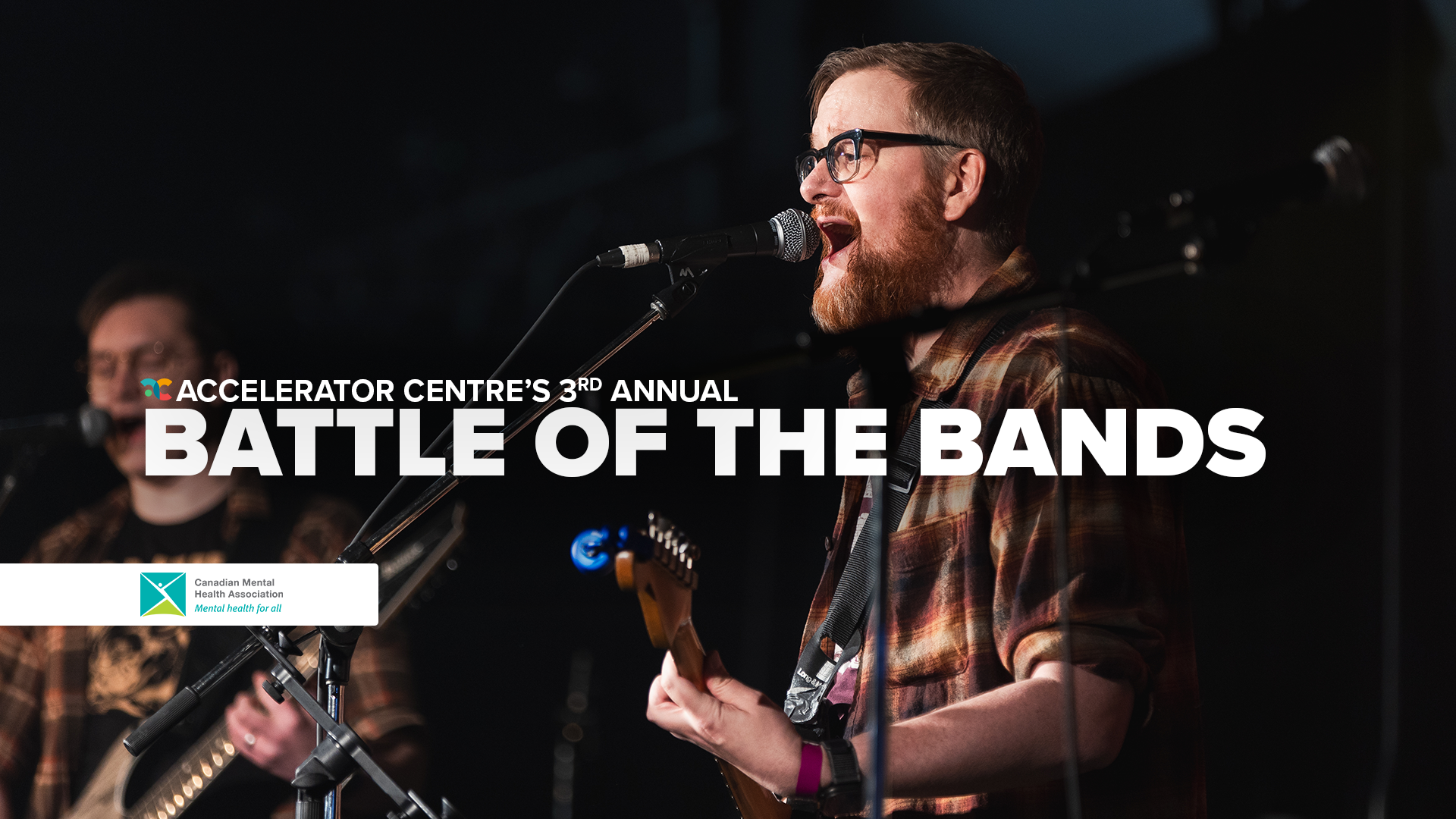
Congrats to Kade, Drew, Mani, Arash, Christy and Emile on finishing AC:Studio, and to the AC on 20 years. If you're one of the 23 companies in cohort three, I'd love to hear what you're building, so send me a note. The AC's next big night is the 3rd Annual Battle of the Bands at Maxwell's on January 18, which raises money for CMHA Waterloo Wellington.